
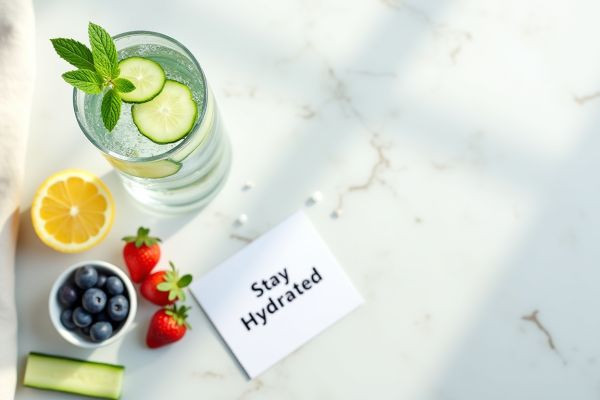
The Science of Hydration: Why Most People Are Dehydrated and What to Do About It
Fatigue, headaches, poor concentration, and low mood are often blamed on stress or poor sleep. The overlooked cause behind many of them is simpler — you are not drinking enough water.
8 min read Health & Wellness Evidence-Based GuideContents
⬇ Jump to BottomQuick Summary
- Water makes up around 60% of the adult body and is required by every major organ system to function correctly
- Research in the Annals of Family Medicine found more than half of US adults are insufficiently hydrated — UK and European data shows similar patterns
- Even mild dehydration of 1–2% of body weight measurably impairs cognitive function, mood, and physical performance
- Thirst is a late signal — by the time you feel thirsty, you are already mildly dehydrated
- The 8 glasses per day rule has no scientific basis — individual needs vary significantly based on body weight, activity, climate, and diet
- Approximately 20% of daily fluid intake comes from food — fruits and vegetables are particularly valuable sources
- Consistent small habits — a glass at wake-up, with each meal, before bed — are more effective than trying to drink large amounts at once
60% of your body is water
Every cell, tissue, and organ depends on adequate water levels to carry out its basic functions
1% loss affects your brain
Just 1–2% dehydration measurably impairs concentration, short-term memory, and reaction time
Thirst arrives too late
The thirst mechanism only activates after dehydration has already begun — you cannot rely on it as your primary hydration signal
Water makes up approximately 60% of the adult human body — a figure that rises to around 75% in newborns and declines gradually with age. Every major system in the body depends on it: the kidneys need water to filter waste, the brain needs it to maintain concentration, the joints need it for lubrication, and the cardiovascular system needs it to maintain blood volume and pressure.
Despite this, research consistently shows that a significant proportion of adults do not drink enough water on a daily basis. A study published in the Annals of Family Medicine found that more than half of children and adults in the United States were insufficiently hydrated — and similar patterns appear in UK and European population studies.
What makes this particularly significant is that the effects of mild dehydration — the kind most people live with daily — are subtle enough to go unrecognised but measurable enough to affect how you think, feel, and perform every single day.
Why Water Is Essential for Every System in Your Body
Water is not simply a thirst-quencher — it is the medium in which virtually every biochemical process in the human body takes place. Understanding what water actually does helps explain why even modest shortfalls have such wide-ranging effects.
Cellular Function
Every cell in the body requires water to maintain its structure and carry out metabolic processes. Water transports nutrients into cells and carries waste products out. Without adequate hydration, cellular efficiency drops measurably — affecting energy production at the most fundamental level.
Temperature Regulation
The body regulates core temperature primarily through sweating — a process entirely dependent on water availability. During physical activity or in hot environments, sweat losses can reach 1–2 litres per hour according to the American College of Sports Medicine, making hydration critical for safe and effective exercise.
Joint Lubrication
Synovial fluid — the lubricant that protects joint surfaces from friction — is predominantly water. Cartilage itself is approximately 80% water. Chronic dehydration contributes to reduced joint lubrication, which over time can increase the wear on cartilage and exacerbate conditions like osteoarthritis.
Kidney Function
The kidneys filter approximately 200 litres of blood per day, removing waste products that are excreted in urine. Adequate water intake is essential for this process — insufficient hydration concentrates urine, increasing the risk of kidney stones. The NHS advises that dark yellow urine is a reliable indicator of inadequate hydration.
How Much Water Do You Actually Need?
The ubiquitous advice to drink eight glasses of water per day — approximately 2 litres — has no rigorous scientific foundation. It appears to have originated from a 1945 US Food and Nutrition Board recommendation that was widely misquoted, as the original text noted that most of this water would come from food. The figure has persisted despite no clinical trials establishing it as a universal requirement.
The actual amount any individual needs depends on multiple factors. The European Food Safety Authority (EFSA) provides reference values that reflect this individual variation more accurately than the eight-glasses rule.
These EFSA figures represent total fluid intake from all sources — including food and all beverages. They also represent averages for sedentary adults in a temperate climate. Hot weather, physical exercise, illness involving fever or diarrhoea, pregnancy, and breastfeeding all significantly increase requirements above these baseline figures.
Mild dehydration is one of the most common and most overlooked contributors to everyday fatigue, poor concentration, and low mood — and one of the easiest to address.
Signs You Are Not Drinking Enough
The challenge with mild dehydration is that its symptoms mimic many other common complaints — making it easy to attribute them to causes that are harder to fix when the actual cause is simple and correctable. Recognising these signs is the first step toward addressing them.
The Urine Colour Test
The NHS recommends urine colour as a simple, reliable hydration indicator:
- Pale straw: Well hydrated
- Yellow: Drink more water soon
- Dark yellow: Mildly dehydrated
- Amber/brown: Significantly dehydrated
Early Signs — Often Misattributed
- Fatigue and low energy — often blamed on poor sleep but frequently caused by reduced blood volume reducing oxygen delivery to tissues
- Headaches — dehydration causes the brain to temporarily contract away from the skull as fluid is lost, triggering pain receptors
- Difficulty concentrating — even 1% dehydration measurably impairs working memory and attention according to research published in the British Journal of Nutrition
- Irritability and mood changes — hydration status has a direct effect on serotonin and dopamine activity, affecting mood regulation independently of other factors
- Hunger when not truly hungry — the hypothalamus, which regulates both hunger and thirst, can confuse mild dehydration with hunger signals
- Dry mouth, lips, and skin — visible signs that the body is prioritising fluid for essential functions over surface tissues
Hydration and Brain Performance
The brain is approximately 73% water and is uniquely sensitive to changes in hydration status. Unlike most organs, the brain is enclosed in a rigid skull, meaning even small changes in fluid levels alter the pressure environment within which it operates. This sensitivity is why cognitive effects of dehydration appear at lower fluid loss thresholds than physical performance effects.
A 2012 study by researchers at the University of Connecticut, published in the Journal of Nutrition, found that even mild dehydration — defined as 1.36% fluid loss — caused measurable degradation in mood, increased perception of task difficulty, and reduced concentration in women, both at rest and after mild exercise. A companion study in men found similar effects, with particular impairment in working memory and psychomotor speed at 1.59% fluid loss. Neither group felt significantly thirsty at these dehydration levels.
The implication is significant: many people who struggle with afternoon energy slumps, difficulty maintaining focus during desk work, or general mental cloudiness may be experiencing the cognitive effects of mild dehydration that has accumulated across the morning — not a fundamental problem with their energy or concentration capacity.
Chronic Mild Dehydration — The Hidden Health Cost
Most discussions of dehydration focus on acute cases — athletes in hot weather, illness involving fluid loss, or extreme environments. The more common and underappreciated problem is chronic mild dehydration: a persistent state of being slightly under-hydrated that many people maintain for years without recognising it as a specific condition.
The long-term health implications of chronic mild dehydration are increasingly well documented. A 2019 study published in eClinicalMedicine — a Lancet journal — found that adults who were poorly hydrated showed accelerated biological ageing markers and higher risk of chronic disease development compared to well-hydrated adults, even after controlling for other lifestyle factors. Researchers followed over 11,000 adults for 25 years, making it one of the most substantial longitudinal studies on hydration and long-term health outcomes.
Associated Long-Term Risks
- Increased kidney stone formation — dehydration concentrates urine minerals
- Higher urinary tract infection frequency — reduced urine flow reduces flushing of bacteria
- Constipation — the colon draws water from stool when systemic hydration is insufficient
- Elevated blood pressure — reduced plasma volume increases cardiovascular workload
- Accelerated biological ageing — per the eClinicalMedicine longitudinal study (2019)
Benefits of Consistent Hydration
- Improved kidney health and reduced stone risk
- Better bowel regularity and digestive function
- More consistent energy levels throughout the day
- Improved skin elasticity and appearance
- Better exercise performance and recovery
Water From Food — The Overlooked Source
The EFSA estimates that approximately 20% of total daily fluid intake comes from food — a contribution that most people significantly underestimate. A diet rich in fruits and vegetables substantially reduces the amount of water that needs to be consumed as beverages, while also delivering the electrolytes — particularly potassium — that support fluid balance at the cellular level.
96%
water content
94%
water content
91%
water content
89%
water content
87%
water content
87%
water content
Practical Strategies to Stay Consistently Hydrated
The most effective hydration strategies work by removing the need to remember to drink water — building fluid intake into existing daily routines so that it becomes automatic rather than effortful.
Start with a glass of water immediately on waking
After 7–8 hours without fluid, the body wakes in a mildly dehydrated state. A 250–300ml glass of water first thing rehydrates tissues, supports kidney function, and has been shown to improve morning alertness. Placing the glass beside the bed the previous night removes any barrier to the habit.
Drink a glass before each meal
Three meals per day plus morning and evening water creates five natural hydration anchors that collectively contribute 1–1.5 litres of fluid without requiring any specific water-drinking schedule. Pre-meal water also has the benefit of being misattributed hunger from thirst — helping distinguish genuine appetite from dehydration-driven false hunger signals.
Keep water visible and accessible
Research in behavioural psychology consistently shows that visibility drives consumption. A water bottle on your desk, a glass beside your kettle, or a jug on the dining table dramatically increases water intake compared to keeping bottles in cupboards or the back of the fridge. The principle is identical to why healthy food placed at eye level in the fridge gets eaten more than healthy food stored at the back.
Increase intake proactively in hot weather and during exercise
The American College of Sports Medicine recommends drinking approximately 500ml of water 2 hours before exercise, 150–250ml every 15–20 minutes during exercise, and continuing to rehydrate after exercise until urine returns to pale yellow. In hot weather without exercise, fluid needs increase by 500ml–1 litre above baseline requirements, depending on temperature and individual sweat rate.
Use urine colour as your daily feedback mechanism
Rather than counting glasses or tracking millilitres, the NHS recommends using urine colour as a practical hydration indicator. Pale straw indicates good hydration. Dark yellow indicates you need to drink more. This approach automatically adjusts for individual variation, activity level, temperature, and diet — making it more accurate than any fixed daily target.
Hydration Myths Debunked
MYTH: You must drink 8 glasses of water every day +
MYTH: Coffee and tea dehydrate you +
MYTH: If you are thirsty, you are already seriously dehydrated +
MYTH: Drinking more water improves skin and makes you look younger +
MYTH: You can never drink too much water +
Consistent, adequate hydration is one of the simplest and most high-impact health habits available — yet it is routinely under-prioritised. You do not need to count glasses or follow rigid rules. Drink a glass on waking, drink before meals, keep water visible throughout the day, eat plenty of fruits and vegetables, and let your urine colour be your guide. Small, consistent habits are all it takes.