
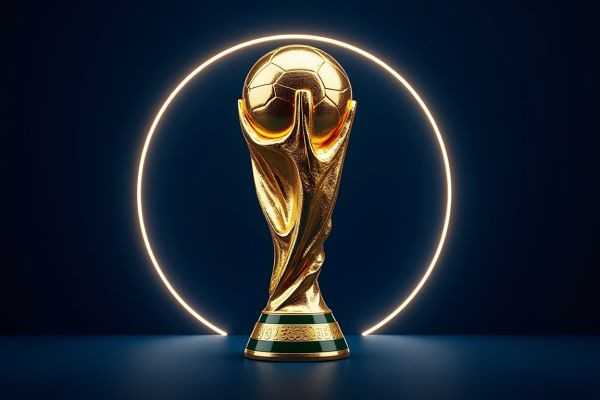
Some Facts About Past Football-Soccer World Cup
A single match in the FIFA World Cup can stay in a fan's memory for decades. This international soccer tournament has produced famous goals, shocking upsets, and national celebrations since its inception in 1930.
This overview of World Cup history covers tournaments through Qatar 2022. It also accounts for two blank spaces in the timeline, as FIFA did not hold the event in 1942 or 1946 because World War II made it impossible for national teams to engage in international competition.
Key Takeaways
- Since its inception in 1930, the FIFA World Cup has grown from a 13-team tournament to a global spectacle, with plans to expand the field to 48 teams by 2026.
- Brazil stands as the most successful nation in tournament history, boasting five championship titles and the distinction of being the only country to participate in every men's World Cup through 2022.
- World War II remains the only disruption in the event's history, resulting in the cancellation of the 1942 and 1946 tournaments.
- Throughout the decades, the sport has continuously evolved through tactical innovations, the introduction of officiating technology like VAR, and rule changes designed to improve gameplay.
- Individual brilliance, from Pelé's early impact to Lionel Messi's 2022 triumph, has consistently defined the tournament's legacy and created moments of national folklore.
How the Football-Soccer World Cup Began and Changed
FIFA staged the 1930 inaugural tournament in Uruguay, with 13 teams taking part. Uruguay beat Argentina 4-2 in the final and became the first champion.
The competition soon grew beyond its small opening field. It had 16 national teams in 1934, expanded to 24 in 1982, and reached 32 in 1998. Qatar 2022 was the last men's tournament with 32 teams. The 2026 FIFA World Cup will feature an expansion to 48 finalist teams. As the number of entries increases, the qualification phase becomes even more critical for nations hoping to secure their spot on the global stage.
The First World Cup in Uruguay Set the Pattern
European teams faced long sea travel to reach South America in 1930. France, Belgium, Romania, and Yugoslavia made the trip, while several leading European nations stayed home.
Montevideo's Estadio Centenario, which represented one of the earliest examples of host nations investing heavily in infrastructure, hosted key matches, including the final. France's Lucien Laurent scored the first goal in history against Mexico on July 13, 1930.
Why Some World Cups Were Cancelled or Relocated
World War II cancelled the planned 1942 and 1946 FIFA World Cup tournaments. No champion was crowned in either year. The event returned in Brazil in 1950, where Uruguay claimed its second title.
Host nations shape every tournament. Stadium quality, travel distances, heat, politics, and home support can affect how teams prepare and play.
Past World Cup Champions, Hosts, and Winning Eras
The list below shows every host and champion through 2022.
Year | Host | Champion |
1930 | Uruguay | Uruguay |
1934 | Italy | Italy |
1938 | France | Italy |
1950 | Brazil | Uruguay |
1954 | Switzerland | West Germany |
1958 | Sweden | Brazil |
1962 | Chile | Brazil |
1966 | England | England |
1970 | Mexico | Brazil |
1974 | West Germany | West Germany |
1978 | Argentina | Argentina |
1982 | Spain | Italy |
1986 | Mexico | Argentina |
1990 | Italy | West Germany |
1994 | United States | Brazil |
1998 | France | France |
2002 | South Korea and Japan | Brazil |
2006 | Germany | Italy |
2010 | South Africa | Spain |
2014 | Brazil | Germany |
2018 | Russia | France |
2022 | Qatar | Argentina |
The Nations With the Most World Cup Titles
The Brazil national football team leads with five titles, won in 1958, 1962, 1970, 1994, and 2002. During the era when the Jules Rimet Trophy was the prize for the competition, the Brazil national football team showcased immense talent to secure their first three victories. Germany has four titles, including three won as West Germany in 1954, 1974, and 1990, plus unified Germany's 2014 victory.
Italy also has four titles among the historic World Cup winners. Argentina has three, while France and Uruguay have two each. England and Spain have one title apiece.
The squads from 1958, 1962, and 1970 showed sustained strength across a generation. Italy became one of the few World Cup winners to secure back to back titles in 1934 and 1938. The titles for Argentina in 1986 and 2022 came 36 years apart, led by different icons.
Matches That Shaped World Cup History
Uruguay's 2-1 win over Brazil in Rio de Janeiro in 1950 silenced a vast home crowd. West Germany then beat heavily favored Hungary 3-2 in the 1954 final. Many legendary teams have seen their dreams end in the semi-finals, but those who advanced to the final have often defined the legacy of the tournament.
England defeated West Germany 4-2 after extra time in the 1966 final. The 1986 run for Argentina featured Diego Maradona's brilliance, including his two famous goals against England.
The 2022 final delivered six goals, a 3-3 draw after extra time, and the victory for Argentina over France following a dramatic penalty shootout.
A World Cup can turn one match into national folklore.
World Cup Records and Player Facts Fans Still Talk About
Miroslav Klose of Germany holds the record as one of the most prolific top goalscorers in the history of the tournament, netting 16 goals across four tournaments from 2002 through 2014. Lionel Messi eventually set the all-time appearance record with 26 matches following the conclusion of the 2022 tournament in Qatar. By winning the final in 2022, Lionel Messi finally secured the one major trophy that had eluded him throughout his legendary career.
Brazil remains the only nation to participate in every men's FIFA World Cup through 2022. Pelé continues to stand out in the history books as the youngest goal scorer in the tournament, having been just 17 years and 239 days old when he scored in 1958.
Goal-Scoring Records and Unusual Results
Single-match performances provide a different perspective compared to long-term career totals. During the 1994 group stage, Russia's Oleg Salenko scored five goals against Cameroon, setting a record for the most goals by an individual in a single men's tournament match.
The 1982 tournament saw the largest winning margin in history when Hungary defeated El Salvador 10-1. In terms of pure speed, Turkey's Hakan Şükür scored just 11 seconds into a match against South Korea in 2002, which remains the fastest goal ever recorded. While these records are impressive, many players compete specifically for the Golden Boot award, which is given to the top goalscorers of each individual tournament.
Players Who Changed How Fans Saw the Game
Pelé brought teenage skill and calm to Brazil during their 1958 title run. Later, Franz Beckenbauer helped redefine the attacking libero role for West Germany. Johan Cruyff never managed to win the tournament, yet his Netherlands team reached the 1974 final with a fluid style of play that influenced generations.
Zinedine Zidane led France to glory in 1998, while Ronaldo Nazario scored twice in the 2002 final to cement his legacy among the great top goalscorers. Lionel Messi eventually completed his own World Cup story in 2022 after years of intense pressure and public expectation, proving that individual brilliance can define even the most competitive knockout stage matches.
Rules, Technology, and World Cup Formats
Older tournaments must be judged in their own context. Squad sizes, qualification paths, substitutions, and tournament formats have changed significantly over the decades.
Yellow and red cards first appeared at a World Cup in 1970. Penalty shootouts first settled a World Cup knockout match in 1982. The back-pass rule arrived before the 1994 tournament to encourage more attacking play.
From 13 Teams to a 48-Team Event
The 1930 event featured just 13 teams. FIFA moved to 16 in 1934, then 24 in 1982, before settling on 32 in 1998. The modern format typically uses a group stage to narrow the field, followed by an intense knockout stage where losers are eliminated. A draw after extra time is ultimately decided by penalty kicks. Looking ahead, the 2026 FIFA World Cup will introduce a major shift as the tournament expands to include 48 finalist teams.
Technology Changed Refereeing
Goal-line technology made its World Cup debut in 2014, confirming if the entire ball crossed the goal line. Video Assistant Referee (VAR) technology first appeared at the 2018 World Cup. Video officials can review goals, penalties, direct red cards, and cases of mistaken identity. These advancements have since been integrated into the Women's World Cup and other international competitions to improve accuracy, though fans still debate the impact on game flow and decision consistency.
A Short World Cup Glossary
- Host nations: The country, or countries, staging the tournament.
- Qualification phase: The series of matches played globally that decide which teams reach the World Cup.
- Group stage: The opening round where teams play within small groups to earn points.
- Knockout stage: The final rounds of the tournament where a single loss results in elimination.
- Extra time: Two added 15-minute periods played if a knockout match ends in a draw.
- Penalty shootout: A series of alternating penalty kicks used to break a tied match.
- Clean sheet: A match in which a goalkeeper or team allows no goals.
- Golden Boot: The prestigious award given to the tournament leading scorer.
- Own goal: A goal scored accidentally by a player into their own team net.
Common Questions About Past Football-Soccer World Cups
Who has won the most FIFA World Cups?
The Brazil national football team has secured five titles, making them the most successful of all World Cup winners. They triumphed in 1958, 1962, 1970, 1994, and 2002. Furthermore, Brazil is the only nation to have played in every FIFA World Cup tournament through 2022.
Which country hosted the first World Cup?
Uruguay hosted the inaugural tournament in 1930 during its centenary celebrations. In a historic final match, Uruguay defeated Argentina 4-2 to claim the trophy on home soil.
Who is the all-time men's World Cup top scorer?
Miroslav Klose holds the record for the most goals scored in the FIFA World Cup, netting 16 times for Germany. Brazil's Ronaldo follows closely in second place with 15 goals.
Which final had the most goals?
The 1958 final remains the highest scoring match in tournament history, with Brazil defeating Sweden 5-2. During this match, a young Pelé scored twice to help his side become one of the most celebrated World Cup winners.
Why were the 1942 and 1946 World Cups not played?
World War II severely disrupted international travel, organization, and the participation of various national teams. Consequently, FIFA cancelled both events, meaning there are no champions for those years.
What were famous World Cup upsets?
History is full of surprises where underdog national teams defied the odds. The United States famously beat England 1-0 in 1950, while North Korea shocked the world by defeating Italy 1-0 in 1966. More recently, Saudi Arabia stunned the eventual champions, Argentina, with a 2-1 victory in 2022.
The Lasting Record of the World Cup
Brazil’s five titles remain the benchmark for success in FIFA World Cup history, while the competition has evolved from a humble 13-team tournament into a massive global event. From the original prestige of the Jules Rimet Trophy to the modern era of advanced tactics and referee technology, the tournament has left an indelible mark on sports.
As we look back at the storied World Cup history, we also turn our attention to the future. The upcoming 2026 FIFA World Cup promises to reach new heights as host nations prepare to welcome an expanded field of teams. Whether you are analyzing legends of the past or looking ahead to new champions, you can consult the official FIFA World Cup archive for verified scores, lineups, and comprehensive player records.